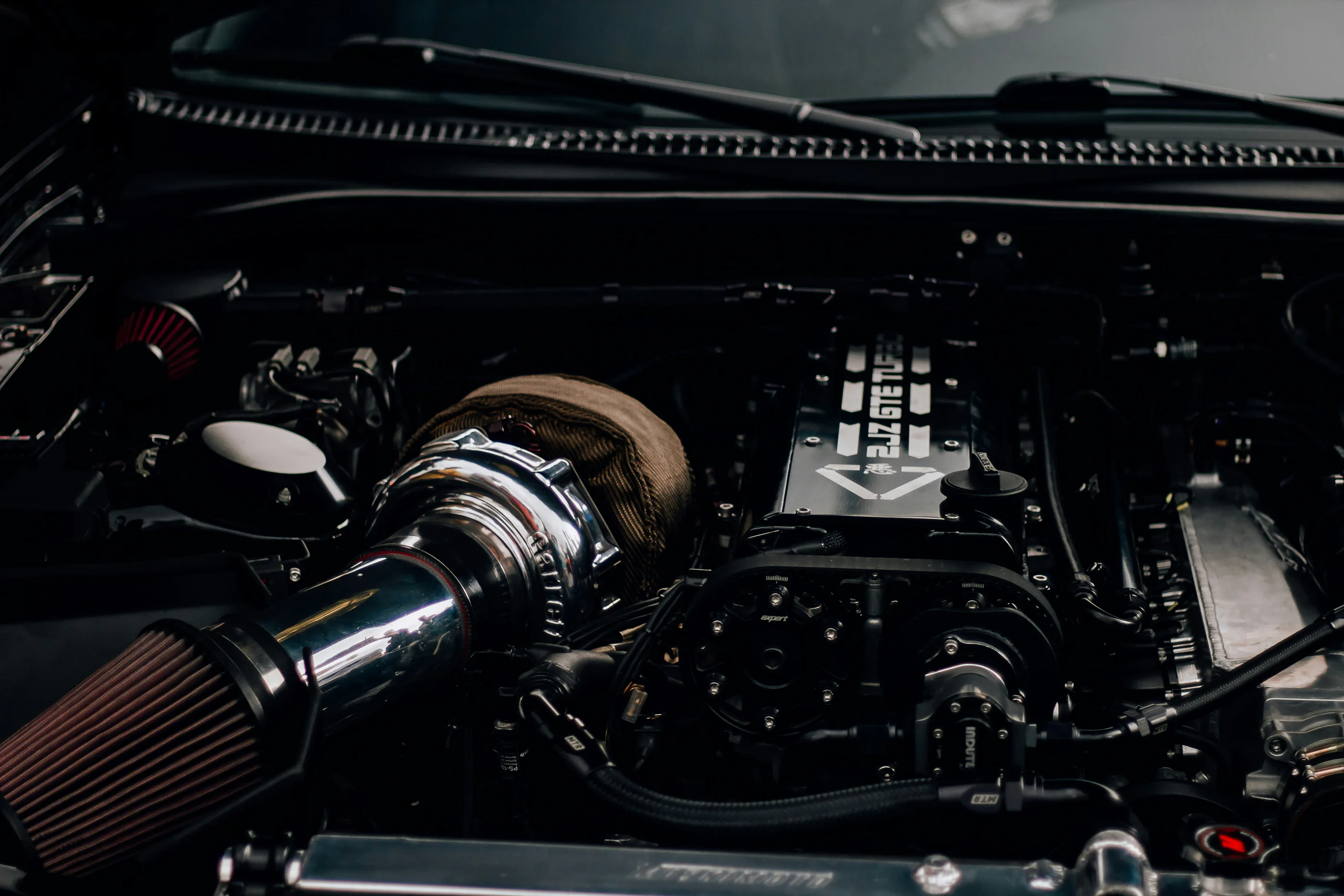
Floor a supercharged engine and the power shows up the instant your foot moves, like someone flipped a switch under the hood. Floor a turbocharged one and there’s a beat, sometimes barely noticeable, sometimes an actual half-second of “come on, come on” before the boost hits. That gap is the whole story. Everything else about these two systems, the noise, the fuel economy, the maintenance bills, traces back to where each one gets its power from.
The quick answer
A supercharger is bolted directly to the engine’s crankshaft, so it spins the moment the engine spins, which means instant boost but a constant parasitic drag on the engine that’s making the power in the first place. A turbocharger runs off exhaust gas that would otherwise go to waste, so it’s more efficient, but it needs the engine to build up exhaust flow first, which is what causes turbo lag. Neither one is objectively better. They’re solving the same problem with opposite trade-offs.
How a turbocharger actually gets its power for free
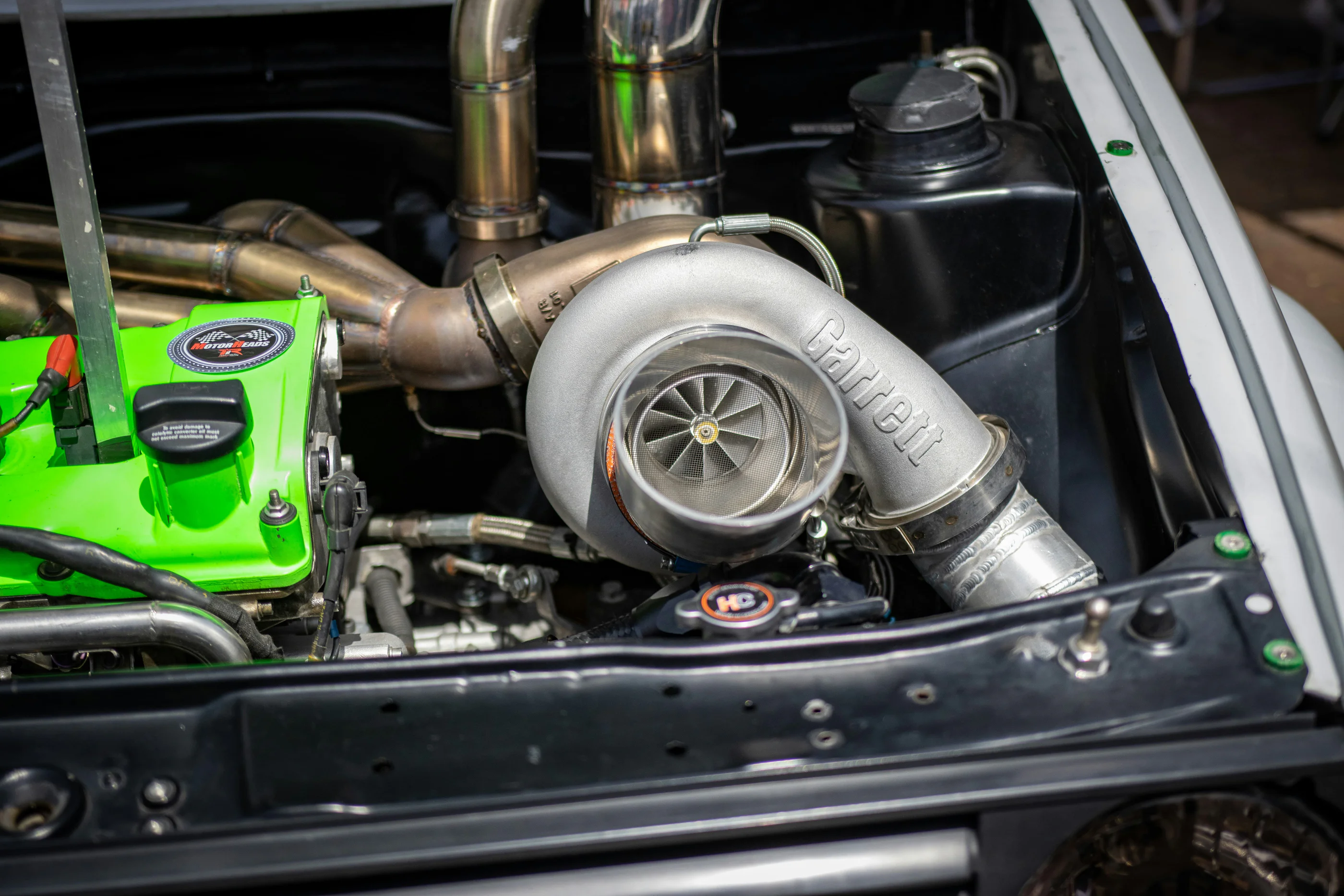
Every gallon of fuel your engine burns produces exhaust gas moving fast enough to do real mechanical work, and on a naturally aspirated engine, almost all of that energy just exits through the tailpipe. A turbocharger sits in that exhaust stream and catches it. The exhaust spins a turbine wheel, which sits on the same shaft as a separate compressor wheel on the intake side. Spin the turbine, and the compressor spins with it, packing more air into the cylinders than atmospheric pressure alone would allow.
That’s the appeal: the boost is essentially recycled energy, not stolen from the crankshaft. It’s also the source of turbo lag. At low RPM, there isn’t enough exhaust volume to spin the turbine fast enough to matter, so you’re driving on roughly the power of a naturally aspirated engine until the exhaust flow catches up.
How a supercharger skips the wait, at a cost
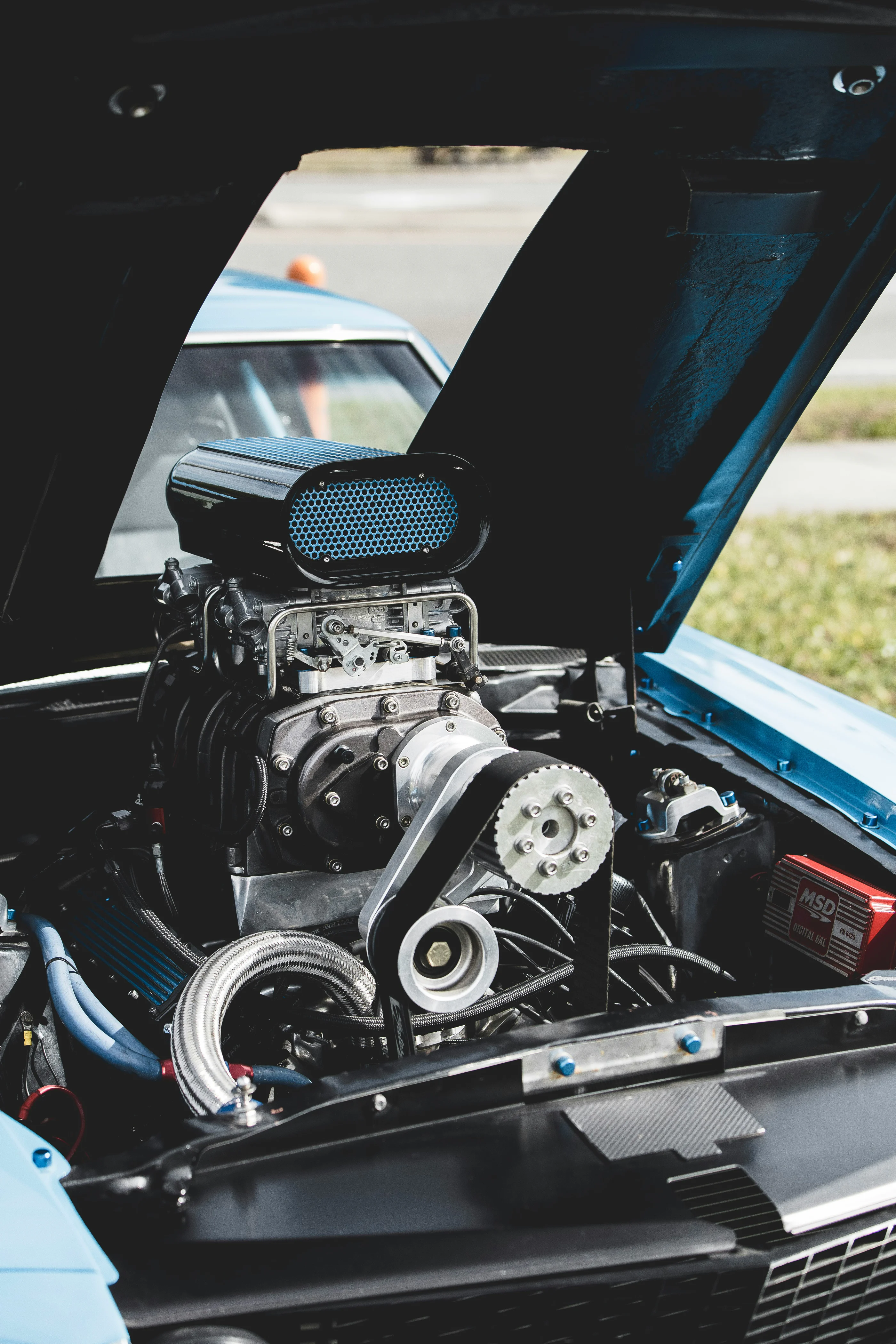
A supercharger is a compressor too, but instead of exhaust gas, it’s driven by a belt connected straight to the crankshaft. That’s mechanically simple and it means the compressor is always spinning at a speed proportional to engine RPM, which is why the boost feels immediate. Some superchargers spin as fast as 50,000 to 65,000 RPM to pressurize the intake air enough to matter.
The catch is right there in how it’s driven. The engine has to spend some of its own output just turning the supercharger, which is why supercharged engines typically see a real fuel economy penalty, often cited around 20%, even though the same setup can add 30 to 50% more power. You’re not getting the boost for free. You’re borrowing it from the engine and paying it back with interest in fuel burned.
The part most explainers skip: engineers stopped choosing between them
Here’s the detail that doesn’t show up in the basic “turbo vs supercharger” comparison: automakers realized years ago that you don’t have to pick one. The 2026 Genesis GV80 Coupe pairs twin turbos with a 48-volt electric supercharger that has no belt and no exhaust dependency at all. It’s powered by the car’s electrical system and spins up almost instantly, engaging only below 1,750 RPM to cover the exact window where a turbo alone would be laggy, then steps out of the way once exhaust flow is strong enough for the turbos to take over. The combined system produces 415 horsepower and 377 lb-ft of torque with no gap in the power delivery. Mercedes-AMG did something similar years earlier with its “twincharged” 3.0-liter inline-six, using an electric supercharger purely to fill in the low-RPM hole a turbo leaves behind. This is the actual state of the art: not turbo versus supercharger, but a small electric supercharger doing the one job a turbo is bad at, for the few hundred milliseconds it takes exhaust flow to build.
A myth worth correcting
You’ll see it claimed that modern turbos have eliminated lag entirely. They haven’t, they’ve just shrunk it to where most drivers don’t consciously register it in daily driving. Smaller turbines, twin-scroll designs, and better bearings all cut the delay down, but the physics of “exhaust flow has to exist before it can spin a turbine” hasn’t gone anywhere. Lag is smaller. It’s not zero. That’s precisely why manufacturers reach for electric assistance instead of pretending the problem away.
Where each one actually falls short
Turbochargers run hot enough to demand real engineering around heat management. Exhaust gas hitting the turbine can exceed 1,700°F, and that heat has to be managed with intercoolers and heat shielding or it degrades performance and engine oil over time.
Superchargers never stop taking a cut, even when you don’t need the power. Cruising on the highway at a steady speed still means the belt is spinning the compressor and drawing engine output, unlike a turbo which mostly idles along with low exhaust flow when you’re not asking for much.
What this means for the car in front of you
If you’re comparing two trims of the same car and one is turbocharged while the other is supercharged, the turbo version will almost always get better real-world fuel economy for equivalent power. If you’re chasing the most linear, predictable throttle response for something like autocross where lag genuinely matters, a supercharged or electrically-assisted setup earns its fuel penalty. And if the car you’re looking at has both, a small electric supercharger alongside a turbo, that’s not a gimmick trim badge, it’s the current best answer to a problem engineers have been fighting since the 1920s.
Either way, that whine or that half-second hesitation isn’t a flaw to diagnose. It’s the sound and feel of two completely different ways of doing the same job.